Back to the journal
Buying
A Buyer's Guide to Marylebone's Mansion Blocks
Red-brick grandeur, uniformed porters and ceilings you could lose a kite in - but every block has its quirks. Here is what we tell clients to weigh before they fall for the facade.
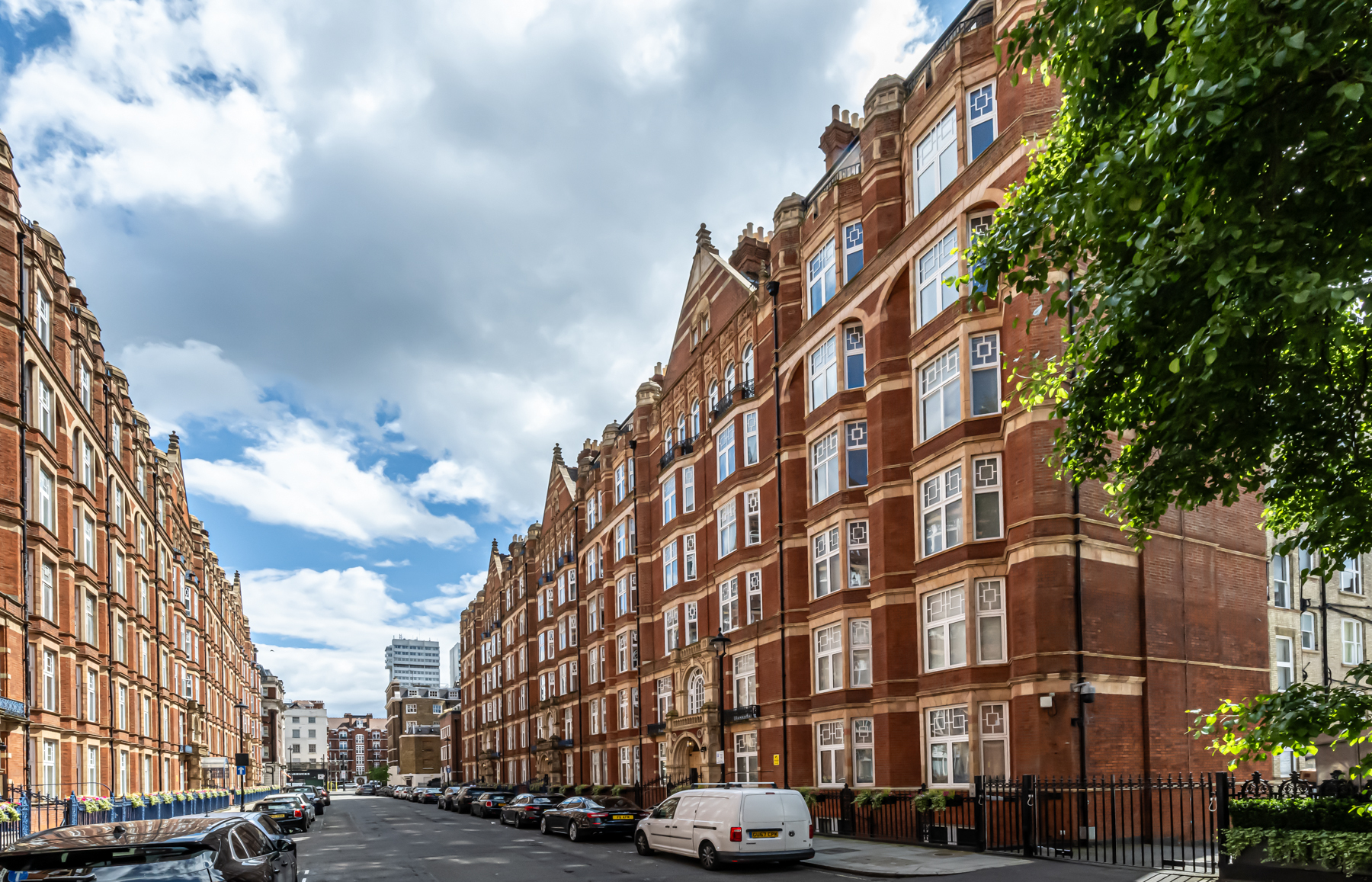
Few things say established London quite like a Marylebone mansions block. Built largely between the 1880s and the 1930s, these red-brick and Portland-stone buildings were the original purpose-built flats - designed for comfortable living within walking distance of the West End. More than a century on, they remain among the most sought-after addresses in the neighbourhood, and for good reason. But buying into one is a particular art, and the differences between two seemingly similar blocks can be considerable.
We have sold flats in nearly every block within half a mile of our Crawford Street office, and the same handful of questions decide whether a purchase is a happy one. Below is the short version of a conversation we have with every buyer.
The facade tells you the building is beautiful. The lease and service charge tell you whether it will be a beautiful place to own.
01
Read the lease before you read the room
Almost all mansion-block flats in central Marylebone are leasehold, frequently held through one of the historic estates. The length of the lease matters enormously; anything under about 80 years starts to affect both value and mortgageability, and extending it can be costly. Ask for the remaining term in writing and ask early 0 it shapes everything that follows.
Just as important is what the lease permits. Sub-letting, structural alterations, even keeping a dog can all be restricted, If you have plans for the flat, make sure the lease agrees with them.
02
Understand the service charge - and what it buys
A porter, a lift, communal heating and a well-kept entrance hall are part of the appeal. They are also part of the bill. Service charges vary widely between blocks, and a low charge is not automatically good news - it can signal underfunding and a large bill on the horizon. Look at the figure, the look at what it delivers:
- Is there a sinking fund for major works such as roofing or lift renewal?
- How recently was the building externally redecorated?
- Are there any Section 20 major-works notices pending?
- What exactly does the porter cover - security, deliveries, both?
03
Light, aspect and the floor you're on
Mansions blocks were built around generous internal courtyards, which means two flats with identical floorplans can feel entirely different depending on whether they face the street or the back. South and west aspects hold their value; lower-ground and deep-courtyard flats can be darker than photographs suggest. Always view at the time of day you would actually be home.
Floor levels is its own conversation. Higher floors trade a few extra stairs - or a wait for a period lift - for quiet and light. If a lift matters to you now or might later, confirm it serves your floor and is well maintained.
04
Picture the works before you fall in love
Period flats reward sympathetic updating, but they come with rules. Listed buildings and conservation -area controls can limit window replacements and external changes, and the freeholder's consent is often needed for internal alterations too. None of this should put you off - it simply belongs in your budget and timeline from day one rather than as a surprise after completion.
Get these four things right and a Marylebone mansion block is on the of the most rewarding ways to live in central London; space, solidity and a sense of permanence that newer buildings rarely match. If you would like us to walk a specific block with you, that is precisely the sort of thing we enjoy! Please so get in touch.
Keep reading
More from the blog
What it is Actually Like to Live in Marylebone?
Brief History of Marylebone